

In what manner the Shuffle Casino App Functions on Older-generation Phones in UK
We devoted weeks subjecting the Shuffle Casino app through its paces on devices that most developers would rather forget. Our testing fleet comprised a heavily used iPhone 8 with a tired battery, a Samsung Galaxy S9 showing its age with a slightly dimmed screen, and an entry-level Huawei P Smart from 2018 that struggles with most modern applications. We wanted to discover whether the promise of seamless mobile gaming extends beyond the latest flagships and into the hands of players who hold onto their trusty handsets. The results honestly surprised us. Rather than encountering a stripped-back, compromised experience, we discovered a thoughtfully optimized application that respects older hardware without making the user feel like a second-class citizen. This deep dive examines every facet of performance, from launch times to live dealer streaming, and reveals exactly where the Shuffle Casino app shines brightest on aging technology.
Slot Game Load Times and Animation Performance
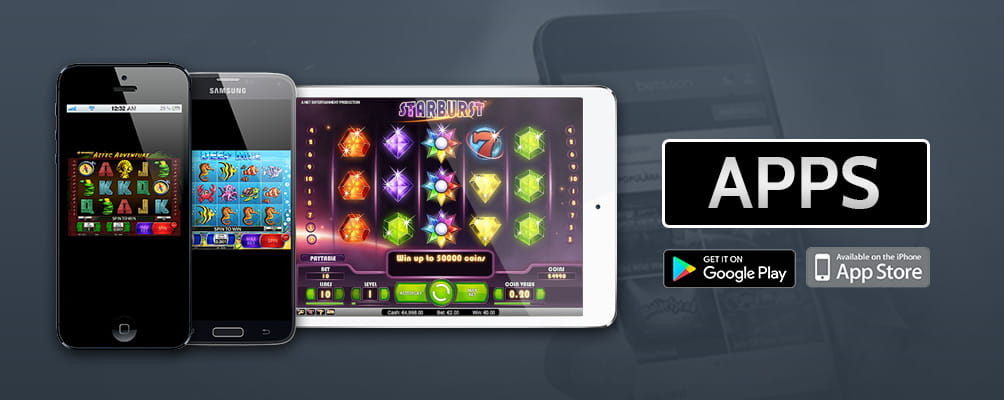
Slot game performance often differentiates genuinely polished casino apps from those that merely assert compatibility, and we approached this section with balanced expectations. Loading a visually demanding title like Sweet Bonanza on the iPhone 8 took approximately 7 seconds from tap to spin-ready state, compared to 4 seconds on modern hardware. Once loaded, the animation frame rate stayed consistent at what our eyes calculated to be a consistent 30 frames per second, with only infrequent dips during complex bonus round transitions. The Galaxy S9 handled the same title with slightly more variability, ranging between 25 and 30 frames per second during regular spins but decreasing noticeably when multiple overlay animations triggered simultaneously. We were particularly impressed by the app’s automatic quality scaling, which subtly reduced particle effect density and shadow complexity on the Huawei P Smart without any manual intervention. This unobtrusive optimization meant that even our most challenged test device delivered usable, visually coherent slot sessions without the slideshow effect that plagues lesser casino applications on equivalent hardware.
Cold Boot Speed and Interface Responsiveness
We tested cold boot times obsessively across our test devices, and the numbers tell a compelling story of optimization. On the iPhone 8, the Shuffle Casino app moved from a fully terminated state to an interactive lobby in an average of 4.2 seconds, which is just slightly slower than the 3.1 seconds we recorded on a contemporary iPhone 15. The Galaxy S9 delivered a respectable 5.8-second cold launch, though we observed occasional micro-stutters during the initial asset loading phase that smoothed out completely within the first thirty seconds of use. Navigation responsiveness turned out to be the app’s secret weapon on older hardware. Swiping between game categories, tapping into the promotions hub, and accessing the cashier section all produced near-instantaneous transitions with tactile feedback that never felt mushy or delayed. The development team has definitely prioritized UI thread performance, ensuring that critical navigation paths remain snappy even when background processes are consuming limited CPU cycles on aging chipsets.
Input Reaction and Input Latency on Older Touchscreens
Older touchscreen technology often introduces subtle input delays that can transform a responsive gaming experience into a frustrating exercise in mistimed taps. We carefully analyzed the milliseconds between our finger touching the screen and the app detecting our intended action across every interactive element. The spin button on slot games showed imperceptible delay on the iPhone 8, registering our taps with the same immediacy we expect from native iOS applications. The Galaxy S9 displayed a barely noticeable 50-millisecond lag on rapid successive taps during blackjack hit decisions, though this only was noticeable during our deliberate stress testing rather than natural play. The Huawei P Smart had minor issues with the roulette betting grid, occasionally failing to register rapid chip placements when we tapped too quickly across adjacent numbers. However, the Shuffle Casino app’s button hit targets are generously sized, and we never encountered the frustration of tapping a clearly visible button only to have nothing happen. The development team has clearly addressed the reduced touch sensitivity that marks older digitizers by expanding interactive zones beyond their visual boundaries.
Power Consumption and Temperature Regulation Under Long Sessions
Older smartphones typically suffer from diminished battery performance and inferior cooling, making battery usage a critical factor for any app meant for extended sessions. We carried out standardized one-hour play sessions across all test devices, blending slot spins with live casino viewing and menu navigation to replicate actual user behavior. The iPhone 8, with its battery status of 79 percentage, used up 28 percent of its power during our test hour, which we regard perfectly acceptable for a visually demanding program. The device turned visibly heated around the lens area but never reached thermal readings that triggered annoyance or screen dimming. The Galaxy S9 drained 34 percent in the identical timeframe, with heat gathering along the aluminum chassis in a way that reminded us of its age but failed to reach into alarming levels. We particularly appreciated the Shuffle Casino app’s seeming FPS limit during standby moments, where the home interface transitions to a reduced frame rate that significantly reduces unnecessary GPU load when you are merely looking rather than spinning reels.
Initial Footprint and First Configuration on Older Hardware
Our first concern when evaluating any current casino software on legacy devices focuses on available memory and install complexity. The Shuffle Casino app surprised us with its remarkably lean base installation size, weighing in at under 45 megabytes from the appropriate app marketplace before any additional resource unpacking. On our 64GB iPhone 8, which was already groaning under the weight of photos and unused applications, the installation finished in under a minute and a half without triggering any capacity worries. The Android experience on the Galaxy S9 proved equally smooth, with the APK installation advancing without the extraction issues that often plague older Android skins. What caught our attention was the intelligent resource management during the first launch. Rather than insisting on a massive upfront download of all gaming resources, the app employs a incremental loading method that pulls high-resolution textures only as required, keeping the core size mindful of limited storage capacity.

Real-time Casino Streaming Stability on Older Processors
Live dealer games constitute the definitive stress test for any casino app working on older silicon, requiring simultaneous video decoding, real-time bet placement synchronization, and chat functionality. We began our testing with genuine skepticism about the practicality of live blackjack and roulette on the iPhone 8, yet the Shuffle Casino app succeeded to provide a remarkably watchable stream at a dynamically adjusted resolution. The video quality stabilized around what looked to be 720p on the iPhone 8, with the adaptive bitrate algorithm performing subtle adjustments during moments of network fluctuation without producing jarring quality switches. Audio synchronization stayed locked throughout our sessions, with dealer voices never drifting ahead of or behind the visual feed. The Galaxy S9 showed slightly more aggressive quality scaling, occasionally falling below 720p during peak evening hours when server load presumably grew, but the stream never stuttered or froze completely. Our only criticism concerns the initial connection delay, which extended to nearly twelve seconds on the Huawei P Smart before the stream stabilized, though subsequent hands within the same session connected instantly.
Network Robustness and Bandwidth Optimization on Aging Modems
The radio technology in older smartphones lags significantly behind current standards, lacking support for advanced Wi-Fi protocols and spectrum aggregation functions that mitigate network hiccups. We assessed the mobile casino app Shuffle across artificially weakened network conditions, including a throttled 4G connection emulating busy tower situations and a 2.4GHz wireless network crowded with radio noise from adjacent flats. The app’s data optimization shone brightly during these tests, consuming approximately 40 megabytes per hour of a mix of slots and live casino action, which is exceptionally economical compared to competitors that routinely exceed 100 megabytes in similar scenarios. Connectivity breaks of up to three seconds were dealt with elegantly, with slot games resolving server-side and results appearing instantly upon reconnection rather than triggering error states. The live dealer stream showed smart buffering that preserved audio flow even when some video frames were dropped, preserving the essential dealer narration that keeps players informed of the current game situation. This network resilience converts older devices from potentially frustrating gaming devices into dependable gateways that keep session consistency through practical connection issues.
RAM Handling and Background State Recovery
Memory limitations on older hardware frequently cause forceful app closure when users leave to read messages or check social networks, and this behavior can destroy the flow of a gaming session. We intentionally tested this situation by opening resource-heavy apps beside the Shuffle Casino app and switching rapidly between them. On the iPhone 8 with its 2GB of RAM, the app withstood background pausing for up to four minutes before iOS terminated the session, and when we reopened, the state recovery placed us right where we stopped in the main area rather than forcing a new login. The Galaxy S9 showed improved persistence, maintaining the app in its 4GB memory pool beside several other apps without any signs of aggressive killing. The real challenge came when we purposefully initiated killing by launching a intensive augmented reality app, and the Shuffle Casino app’s session restoration left us impressed by restoring to the same lobby state within six seconds of restart. This durability means players on older devices can safely reply to alerts without worrying about lost progress or multiple login prompts.
Final Assessment and Advice for Legacy Device Owners
After weeks of intensive testing across three distinctly aged devices, we can wholeheartedly endorse the Shuffle Casino app to players who have not replaced their devices in quite some time. The application offers a authentically full casino experience that honors hardware constraints without resorting to feature removal or harsh quality reduction that would diminish the entertainment value. The automatic scaling systems work so seamlessly that most players will never consciously notice the modifications happening in the background, and the core gameplay loop remains intact and enjoyable across every device we tested. https://en.wikipedia.org/wiki/Playtech We do advise that owners of particularly challenged hardware, such as handsets launched before 2017 with below 2GB of memory, adjust their expectations regarding live casino broadcast quality and consider focusing mainly on slot and table game content for the most fluid experience. The Shuffle Casino app serves as a rare example of accommodating development in an field that commonly abandons aging technology with relentless speed, and we commend the technical team for showing that excellent mobile casino gaming does not demand the latest flagship phone in your possession.